










Become a DevOps Engineer with the Best DevOps live program in the USA

  • Live Instructor Led Hands On Training 
  • 5 Year Recording Access
  • Task Based Learning
  • 5 Live Projects
  • Digitally Verifiable Completion Certificate
  • Small Batch Size For Interaction
  • Resume Building
  • LinkedIn Profile Optimization
  • Mock Interviews

Apply Now

Eligibility: Graduated or Pursuing Graduation

Learning Path

Linux basic to advaced

Demo Training Videos

Linux basic to advanced


July Intakes
(Every Intake has 20 seats only)

Schedule 1

DevOps Master Program

Time: 08:30PM – 10:30PM EST  

Days: Sunday to Wednesday   

Mode: Online 

Starting Date: 5th April 2026

Schedule 2

DevOps Master Program

Time: 06:00AM – 08:00AM EST  

Days: Monday to Thursday   

Mode: Online 

Starting Date: 13th April 2026

Schedule 3

DevOps Master Program

Time: 07:30AM – 09:30AM EST  

Days: Saturday – Sunday   

Mode: Online 

Starting Date: 18th April 2026

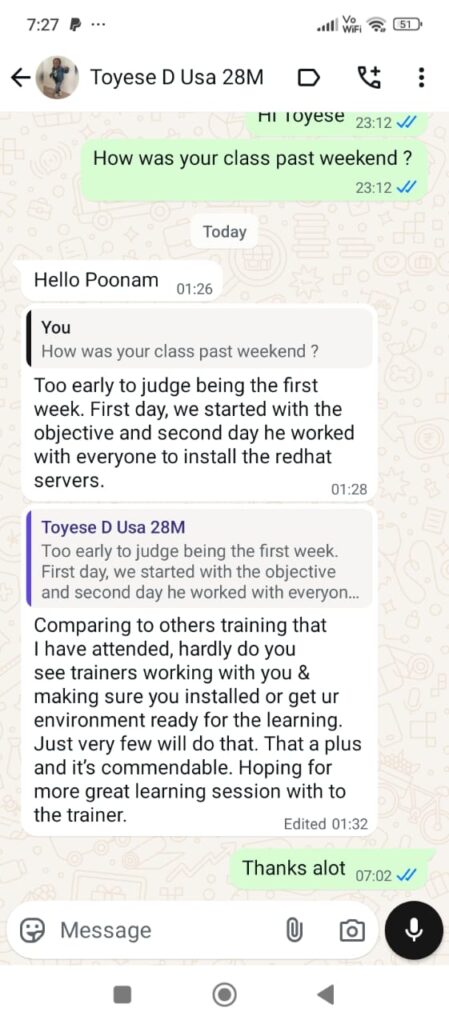
WhatsApp Achievements

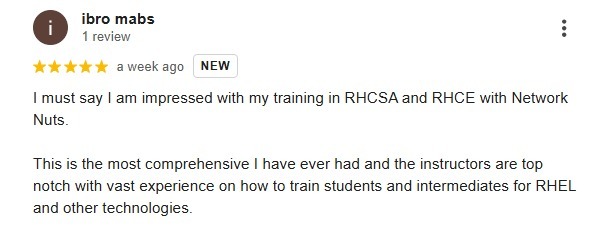
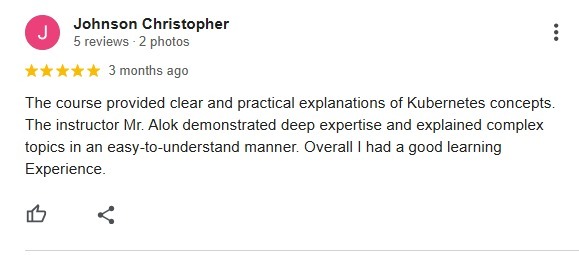
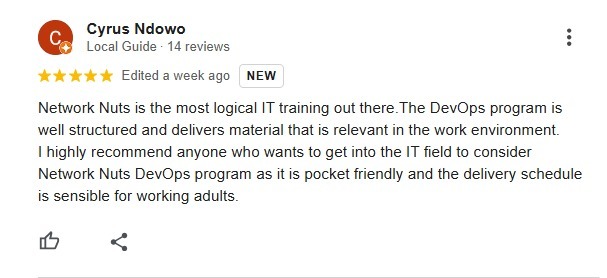
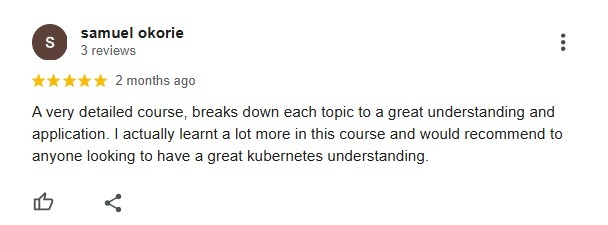
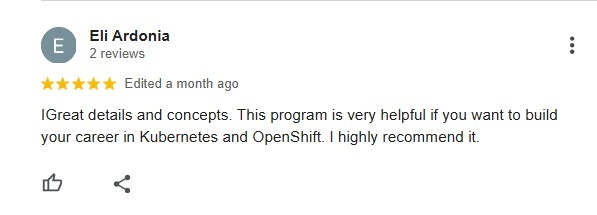
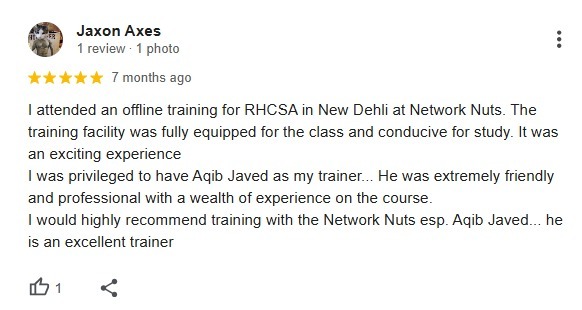
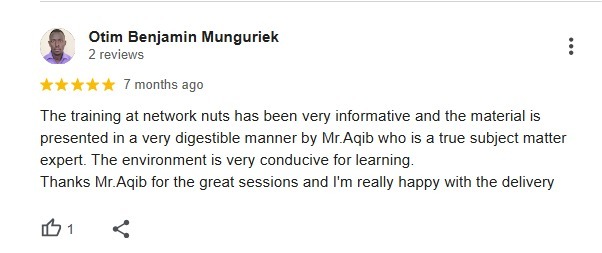
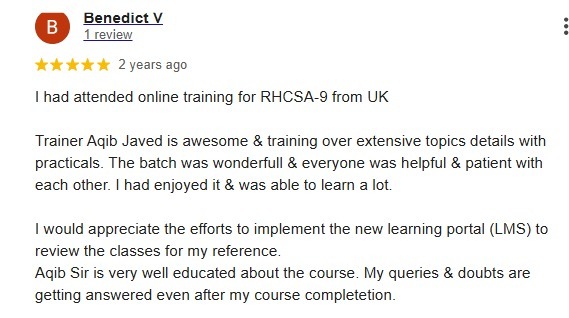
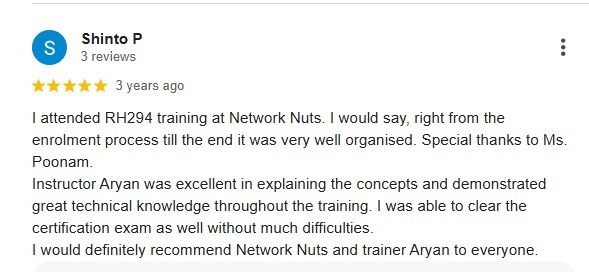
Google Reviews

In our all  training, we provide a task based learning program based on read life scenarios.


Here we provide the candidate with bunch of challenges to perform after learning a concept to validate their skills.


Here is a screenshot of a task from our Kubernetes training from controlling scheduling chapter.

This proves to be very useful during interviews.

Mock Interview Preparation

Students will go through a number of mock interviews conducted by technical experts who will then offer tips and constructive feedback for reference and improvement.


Non-Technical Interview Preparation

Students will also receive 4 exclusive sessions with an Industry HR to understand the non-technical questions asked and how to properly answer them.

Resume & LinkedIn Profile Building

Get assistance in creating a world-class resume & Linkedin Profile from our career services team and learn how to grab the attention of the hiring manager at profile shortlisting stage.  

Tips to improve your profile :

 – Profile picture

 – Banner

 – Headline

 – About 

 – Skills

 – Education

 – Experience

 – Publication/Certification

 – Good network

 – Languages


Frequently Asked Questions

Is this training live or pre-recorded?

The training is live instructor led training which is available in classroom as well as online format. We also record every training session which is then uploaded to our student portal.

The live online training is conducted via the zoom software, we will be providing you with the zoom meeting link to join the training.

On an average one batch will have a maximum of 18 students. We keep smaller batch sizes to promote interaction between the students and the instructor.

We will provide you with online labs. If needed, we can also provide you with the software required to create your own labs.

Yes, we provide zero interest EMI options.

Yes, our classroom training location is in New Delhi near Lajpat Nagar metro station.

DevOps-certified professionals who are working in a real-time environment are designated as DevOps Engineers. The main area of focus for DevOps engineers is to maintain seamless communication between the development and operational side of an organization. They follow the principles of continuous development, continuous testing, continuous integration, continuous deployment and continuous monitoring to make sure that the product gains maximum profitability.
 

DevOps is a methodology that incorporates software development (Dev) and IT operations (Ops) to improve an organization’s capacity to offer services and applications at a rapid speed, transforming and improving their products at a much faster rate than those who employ the traditional system of technology development or infrastructure administration practices. To know more about What is DevOps you can refer to our blogs and tutorials.

Enrolling in a DevOps course offers several advantages:

  • Customer satisfaction
  • Collaboration
  • Process automation
  • Better job opportunities
  • Increased efficiency
  • Increased salary
  • Boost product quality
  • Career Advancement
  • Faster development and deployment of applications
  • Improved knowledge and skills

In summary, a DevOps course provides a structured and comprehensive approach to mastering the principles and practices of DevOps, empowering you with the skills and knowledge needed for success in today’s technology-driven landscape.

DevOps is a software development process that involves Continuous Development, Testing, Integration, Deployment, and Monitoring of the software throughout its development life cycle. These activities are possible only in DevOps, not Agile or Waterfall, which is why Facebook and other top companies have chosen DevOps as the way forward for their business goals.

DevOps encompasses various roles, each contributing to the successful implementation and execution of DevOps practices within an organization. Some common roles in DevOps include:

  1. DevOps Engineer
  2. Release Manager
  3. Automation Engineer
  4. Continuous Integration/Continuous Deployment (CI/CD) Engineer
  5. System Administrator
  6. Quality Assurance (QA) Engineer
  7. Security Engineer
  8. Site Reliability Engineer (SRE)

These roles may vary depending on the organization’s size, structure, and specific requirements. Still, they all play a crucial part in implementing and maintaining DevOps practices effectively.

While it’s feasible for individuals without an IT background to pursue DevOps, it necessitates the appropriate mindset and readiness to grasp and adjust to new technologies and methodologies. Nonetheless, a fundamental comprehension of the technologies and methods inherent to DevOps is crucial. By enrolling in DevOps training online, even without a deep technical background, you can acquire the skills needed to become a DevOps Engineer.

Yes, a software tester can gain significant advantages from enrolling in a DevOps course. DevOps strives to unify and automate the procedures linking software development with IT operations.

If you’re a newbie, you can apply to various jobs for junior DevOps Engineer. It is essential to remember that as a newbie, you will only have a few chances to make a name for yourself in DevOps. But don’t let that hinder you from pursuing your ambitions for your career!

The responsibilities of a DevOps engineer typically include:
  • Designing and Implementing CI/CD Pipelines 
  • Infrastructure Automation
  • Configuration Management
  • Monitoring and Logging
  • Collaboration and Communication
  • Security and Compliance
  • Cloud Services Management
  • Incident Response and Resolution
  • Scripting and Automation
  • Continuous Improvement

The timeline to become a DevOps engineer varies depending on several factors, including your prior experience, existing skills, learning pace, and the intensity of your training. Here’s a general outline of the steps involved and a rough estimate of the time it may take:

  1. Foundation Skills (3-6 months)

  2. Understanding DevOps Principles (1-2 months)

  3. Learning Tools and Technologies (3-6 months)

  4. Building Real-world Experience (6-12 months)

  5. Certifications (optional, 1-3 months)

  6. Continuous Learning and Improvement (ongoing): 

Overall, becoming a proficient DevOps engineer typically takes around 1 to 2 years, but this timeline can vary based on individual circumstances and dedication to learning. It’s important to focus on building a strong foundation, gaining practical experience, and continuously improving your skills to excel in this dynamic field.

Edureka’s DevOps Course provides a comprehensive learning experience through a blended approach. Our Live Virtual Classes, conducted by Edureka Instructors, are seamlessly integrated with hands-on labs for practical exercises and projects. In addition, learners gain access to select pre-recorded self-learning videos within the Learning Management System, enhancing the content covered in Live Virtual Classes.

Learning DevOps offers a multitude of benefits, including:
  • Improved Collaboration
  • Increased Efficiency
  • Enhanced Quality
  • Scalability and Flexibility
  • Cost Savings
  • Improved Reliability and Stability
  • Career Opportunities
  • Continuous Learning
Overall, learning DevOps equips individuals with worthwhile skills and understanding that are essential for succeeding in today’s fast-paced and technology-driven IT landscape.

DevOps methodology is based on the principles of continuous deployment, integration, and monitoring. It emphasizes the need for constant changes and upgrades to drive software application production and maintenance. The process starts with planning and coding, and then the application is built and tested. The Ops team releases and deploys the application and is also responsible for monitoring it.

The salary of a DevOps Professional are as follow:

DevOps engineers have promising job prospects driven by factors such as industry adoption, cloud computing, continuous integration/deployment, containerization, automation, security integration, job diversity, and alignment with Agile methodologies. Staying updated with industry trends and continuously improving skills through a DevOps Course is crucial for competitiveness in the job market.

DevOps tools choice depends on project requirements. Some widely used tools include Git for version control, Jenkins, Travis CI, and GitLab CI/CD for CI/CD, Docker, and Kubernetes for containerization and orchestration, Terraform and Ansible for Infrastructure as Code (IaC), Chef and Puppet for configuration management, Prometheus and Grafana for monitoring, ELK Stack for logging, Slack and Microsoft Teams for collaboration, AWS and Azure for cloud platforms, HashiCorp Vault for security, and Selenium for testing. Understanding the principles and concepts underlying these tools is crucial as the DevOps landscape evolves, with new tools emerging over time.

DevOps is a rapidly growing field, and many job roles are available in the United States for professionals with DevOps skills. Some of the common job roles in DevOps include
  • DevOps Architect
  • Site Reliability Engineer (SRE)
  • Automation Engineer
  • Cloud Architect 
  • Security Engineer
  • Release Manager
  • DevOps Consultant

To become a DevOps engineer, here is the suggested DevOps Engineer learning path:

  1. Learn foundational technical skills like Linux, networking, and scripting.

  2. Understand DevOps principles and methodologies.

  3. Gain hands-on experience with DevOps tools like Jenkins, Docker, and Kubernetes.

  4. Work on real-world projects or internships to build practical experience.

  5. Consider obtaining relevant certifications for validation.

  6. Continuously learn and remain updated on industry trends and technologies.

  7. Develop soft skills like communication and collaboration.

  8. Network within the DevOps community for opportunities and insights.

According to Payscale, the average salary of a DevOps professional is ₹715,130 in India and $96,418 in the United States.

DevOps represents a promising future in the IT landscape, offering a diverse range of solutions to address various IT challenges. It’s evident that DevOps professionals enjoy competitive salaries and a strong sense of commitment to their roles. This methodology is receiving acclaim from numerous IT companies for its ability to deliver efficient and faster solutions to their clients.

Your access to the Support Team is for a lifetime and will be available 24/7. The team will help you in resolving queries during and after the DevOps course.

Microsoft offers the Microsoft Certified: DevOps Engineer Expert certification and focuses on DevOps practices in the context of Microsoft Azure. It covers topics like continuous integration, continuous delivery, infrastructure as code, and more. Earning this DevOps certification demonstrates your expertise in implementing DevOps practices using Azure services.

Post-enrolment of the DevOps course, the LMS access will instantly be provided to you and available for 5 years. You can access the complete set of previous class recordings, PPTs, PDFs, and assignments. Moreover, access to our 24×7 support team will also be granted instantly. You can start learning right away.

Yes, Network Nuts provides DevOps assistance with a DevOps Course. After completing this DevOps Training and Certification course, you will be able to qualify for a job interview. Network Nuts provides DevOps Interview Questions, which prepare learners for DevOps interviews and crack interviews in 1st attempt. Network Nuts also provides a resume builder tool in your LMS. Now, you will be able to create a winning resume in just 3 easy steps. More than 70% of Network Nuts Learners have reported changes in job profile (promotion), work location (onsite), lateral transfers & new job offers.

Here is the typical Day-to-day activities of a DevOps Engineer:
  • Check for urgent messages.
  • Coding. 
  • Building
  • Testing
  • Deploying
  • fixing bugs
  • Monitor and troubleshoot.
  • Resting

Here are a few examples of engaging and informative DevOps engineer resume headlines include:
DevOps engineer with “x” years of experience deploying CI/CD pipelines.
“Proficient in automation of cloud infrastructure and deployment.”
“Expert in managing and scaling containerized environments using Kubernetes.”

“DevOps real time projects are available on multiple sources like:
  • Online Platform like GitHub, GitLab etc.
  • NetworkNuts DevOps Course provides real time projects and case studies.
  • Participating in Hackathons.
  • Engage in Open Scouces communites liks kubernetes, jenkins.
  • Meetup and workshops also provides hands-on experience on DevOps.
Call Us Now
WhatsApp